
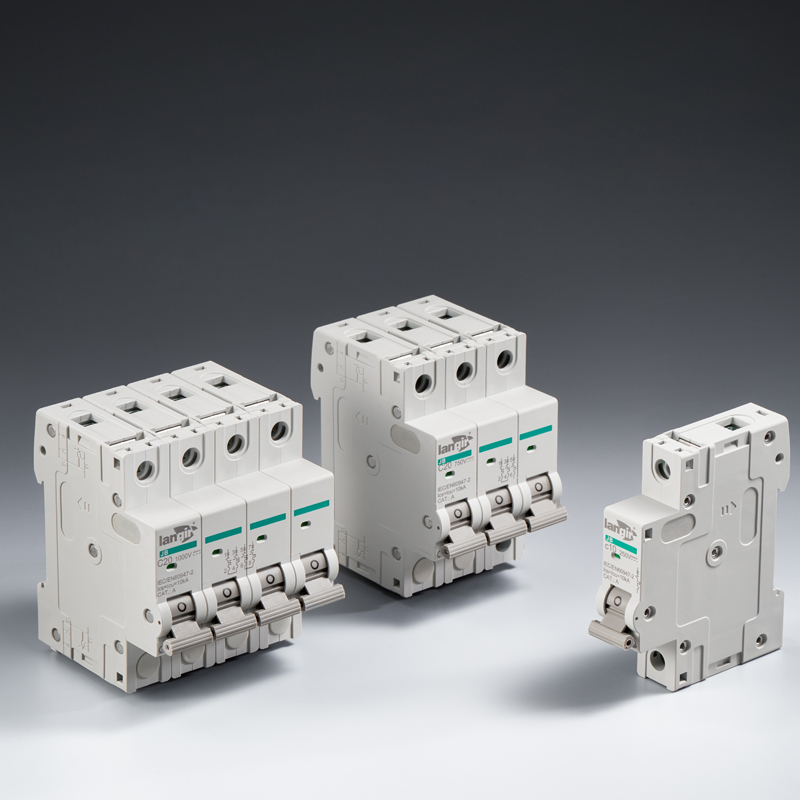
The DC Circuit Breaker – Miniature Circuit Breakers for DC and Solar Generation is a circuit protection device supplied by Push Buttons Unlimited for commercial and industrial applications. Order it as a standalone part or as part of a complete panel build. Call 1-774-987-9474 or request a free price quote and we will confirm specification, lead time, and pricing for your quantity.
Get a Free Price Quote or call 1-774-987-9474. Part numbers and configurations can be matched to your panel or protection requirement.
Description
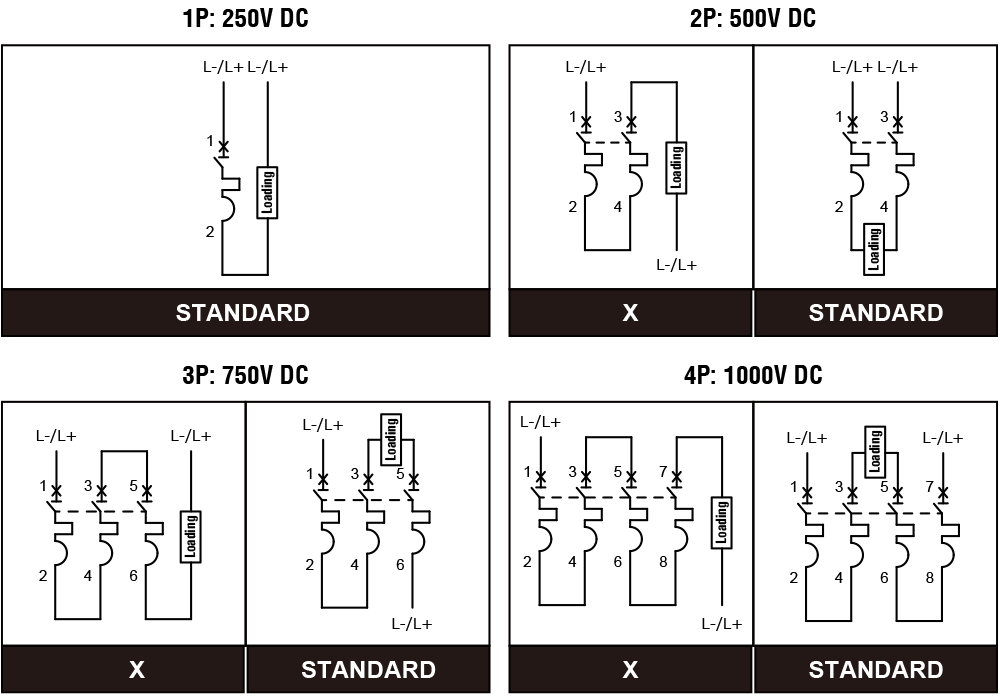
The JB is a DC circuit breaker dedicated to multi string photovoltaic installations. This circuit breaker protects cables between PV modules and inverter against overloads and short circuits. IEC 60947-2, EN60947-2, GB 14048.2 compliant.
Technical Data
| Circuit breaker Type | 1P=120g, 2P=240g, 3P=360g, 4P=480g |
| AC Vs DC Circuit Breakers | The importance of the DC ARC Extinguisher |
| Principle | Fuses use a wire that melts to break the circuit during overcurrent, while circuit breakers use a switch or trip mechanism. |
| Resetting | Fuses are one-time-use and need replacement, while circuit breakers can be manually or automatically reset. |
| Response Time | Fuses have a faster response time than circuit breakers. |
| Reusability | Fuses are disposable, while circuit breakers can be reused multiple times. |
| Sensitivity | Fuses are more sensitive to overcurrent, while circuit breakers have adjustable settings. |
| Application | Circuit breakers offer more flexibility and can protect against both overcurrent and short circuits. |
| Railway | DC circuit breakers are crucial for ensuring safety and reliability of power systems in railways. These breakers are capable of quickly detecting faults in circuits and cutting off the current to prevent damage to electrical equipment or potential fires. In railway systems, DC circuit breakers can also assist with controlling the operation and stopping of trains, as well as optimizing energy usage. |
| Power System | DC Circuit Breakers are essential for safe and reliable power systems, especially in solar energy. These breakers detect and isolate faults, protecting PV panels from overcurrent conditions and maximizing system efficiency. ’s DC Circuit Breaker (JB) can be applied to grounded or ungrounded systems and meets higher voltage and lower fault current levels of solar systems. |
| Home | DC Breakers are an essential safety feature for home electrical systems. These breakers protect against overcurrent conditions that can lead to electrical fires and equipment damage. In addition, they can help homeowners optimize energy usage by monitoring and controlling the flow of electricity. |
| Office Building | DC Breakers are commonly used in office buildings for a variety of applications, such as protecting electrical panels and equipment, controlling lighting and HVAC systems, and managing emergency power systems. They are also a crucial component of renewable energy systems, such as solar panels and wind turbines. |
| Voltage Rating | Determine the maximum voltage of your DC system. Ensure that the circuit breaker’s voltage rating matches or exceeds your system voltage to ensure proper protection. |
| Current Rating | Identify the maximum current that your DC circuit can handle. Choose a circuit breaker with a current rating that matches or exceeds the maximum current of your system. |
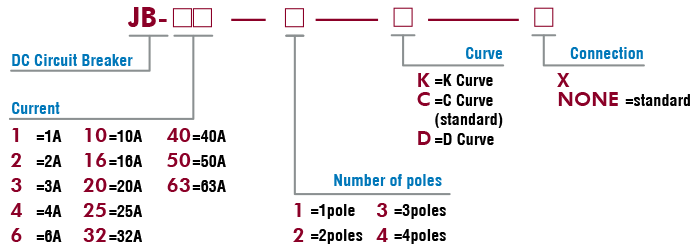
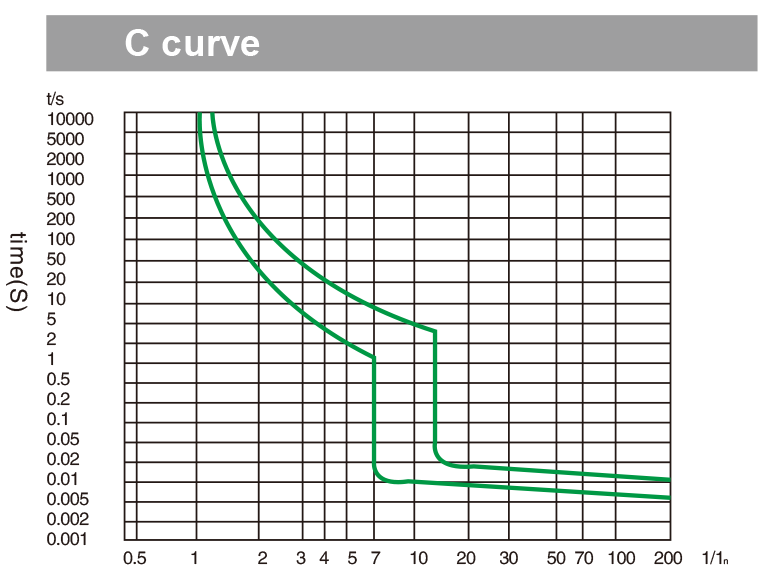
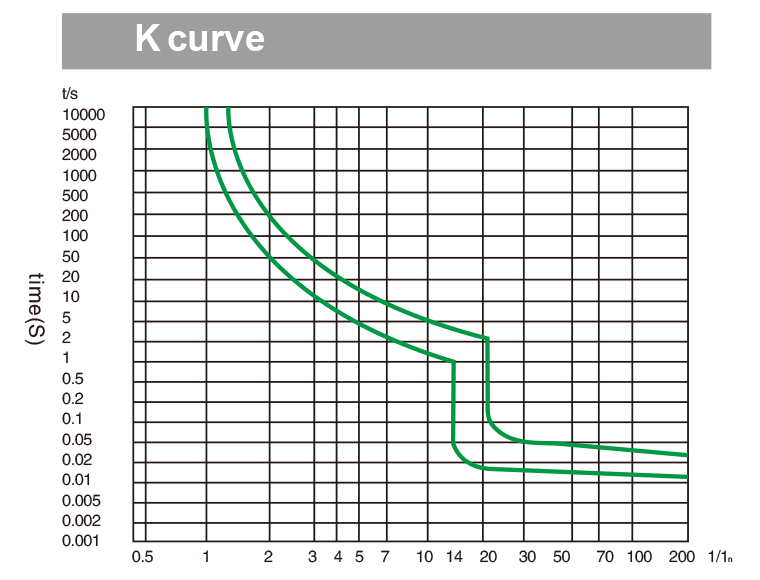
| Trip Curve | Consider the desired trip curve, which determines how quickly the circuit breaker will trip in response to an overload or short circuit. Different applications may require different trip curves based on the level of protection needed. |
| Breaking Capacity | Evaluate the breaking capacity or interrupting rating of the circuit breaker. It indicates the maximum fault current that the breaker can safely interrupt without damage. Ensure that the breaking capacity meets or exceeds the fault current of your DC system. |
Related Products
Snap Action Thermostat | Electrical Busbar System | DIN Rail Support /Brackets /Mounting | 35mm DIN Rail | All Circuit Protection